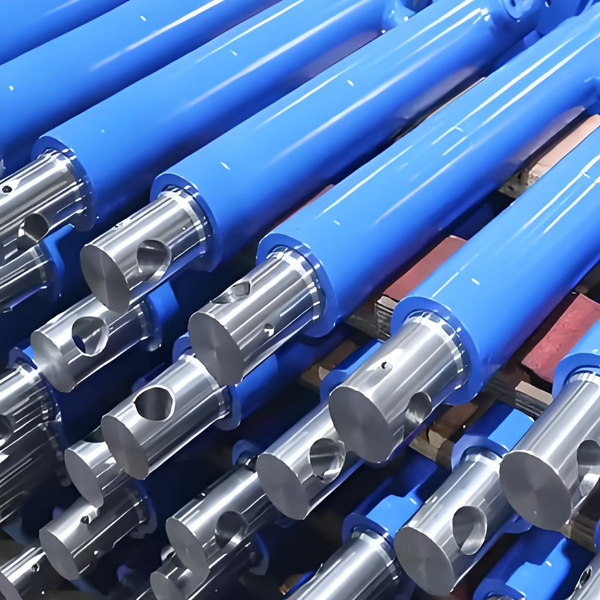
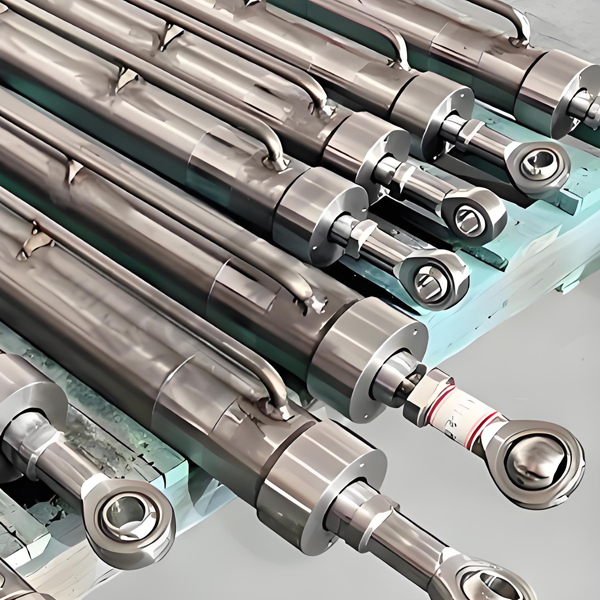
1. High-Quality Raw Materials Our raw materials are primarily sourced from renowned steel mills such as Jiangsu BOS Hydraulic Technology Co., Ltd., Baosteel, Ansteel, and Changjiang Steel Pipe.
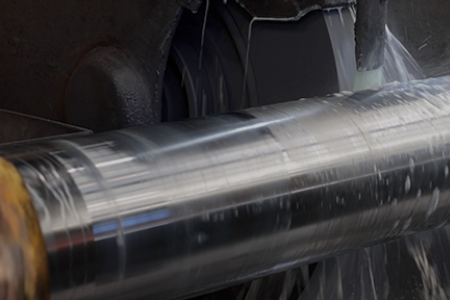
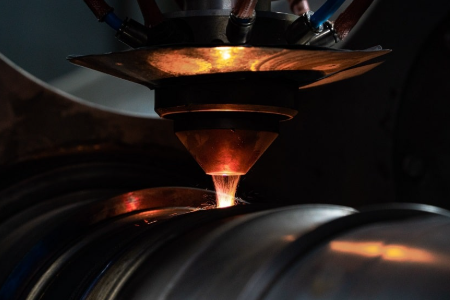
2. Advanced Production Equipment Our manufacturing facilities include cold drawing machines, honing machines, skiving and roller burnishing machines, straightening equipment,polishing machines, heat treatment furnaces, grinding machines, and more.
3. Rich production experience, strict quality control We implement a professional internal quality control system to conduct comprehensive inspections on all products.
304 stainless steel hydraulic cylinders play an irreplaceable role in specific industrial fields due to their unique material advantages. It is not only the implementer of functionality, but also a symbol of reliability, cleanliness, and modern industrial aesthetics
Excellent corrosion resistance: This is its most prominent feature. 304 stainless steel contains over 18% chromium and over 8% nickel, which can form a dense and strong chromium oxide passivation film on the surface, effectively resisting corrosion from water, steam, atmosphere, as well as various acid, alkali, and salt solutions. This makes it particularly suitable for humid and highly corrosive environments.
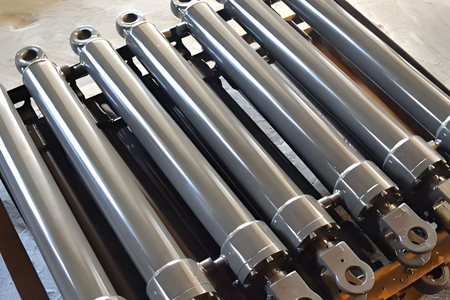
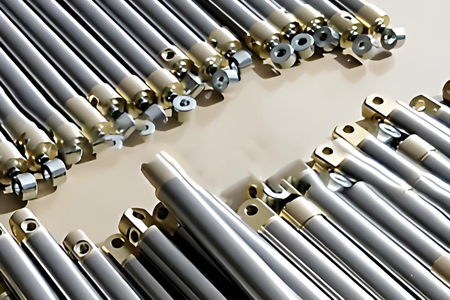
High strength and hardness: Although stainless steel has a high density, 304 stainless steel itself has sufficient mechanical strength. After cold work hardening, it can withstand the high pressure and working load inside the hydraulic system, ensuring that the cylinder body does not deform or break under high pressure.
Hygiene and Cleanliness: The surface of 304 stainless steel is smooth and pore free, making it less prone to bacteria and pollutants, and very easy to clean and disinfect. This characteristic makes it an indispensable choice for industries such as food and medicine.
Beauty and durability: Its silver glossy appearance does not require electroplating or other surface treatments, and it already has a modern industrial aesthetic. And it is not easy to rust or fade, and can maintain the appearance of the equipment clean for a long time.
Wide temperature adaptability: able to maintain good mechanical properties within a wide temperature range of -196 ° C to 800 ° C, suitable for high or low temperature conditions.
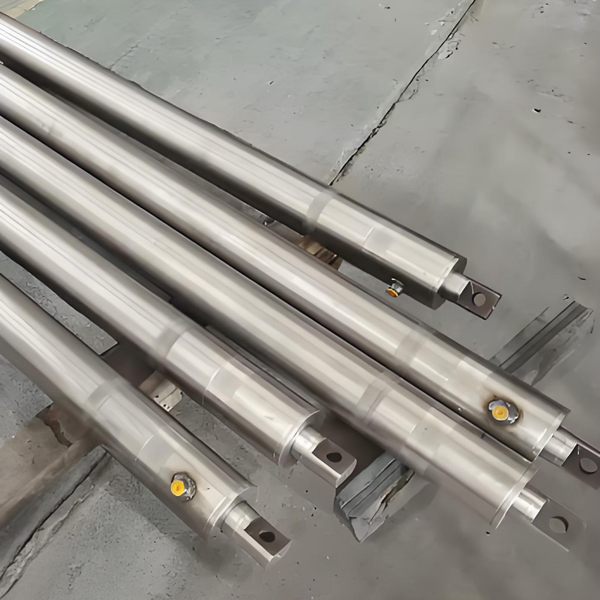
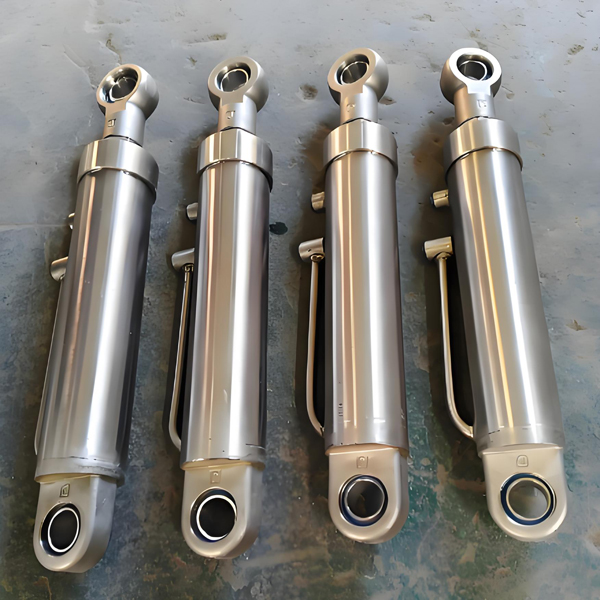
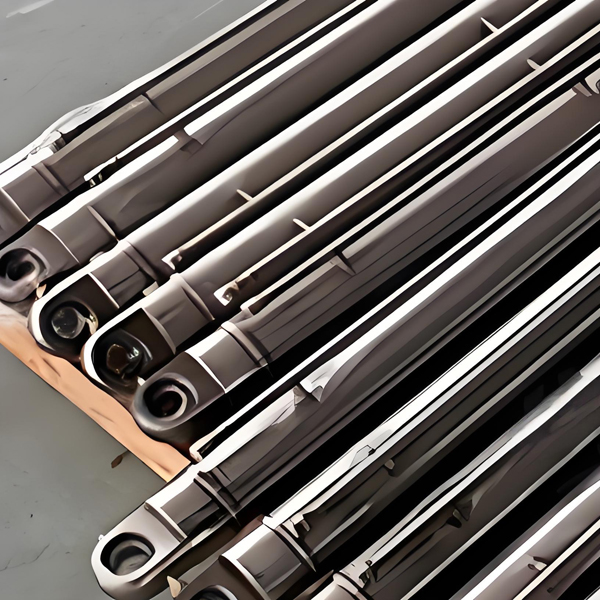
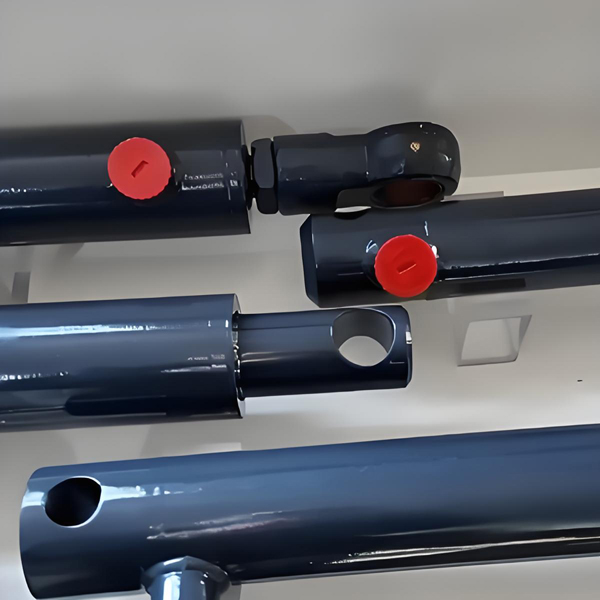
304 stainless steel hydraulic cylinder is a hydraulic actuator mainly made of AISI 304 stainless steel. It converts the pressure energy of hydraulic oil into mechanical energy of linear reciprocating motion, thereby driving the load to do work.
Its core components are similar to ordinary hydraulic cylinders, mainly including:
Cylinder barrel: Made of precision machined 304 stainless steel seamless tube, it is the main body that bears hydraulic pressure.
Piston rod: usually made of high-strength, surface hardened 304 stainless steel rod material, it is a key component for transmitting power.
Piston: Installed on the piston rod, it divides the interior of the cylinder into two chambers.
Sealing system: composed of a series of sealing components to prevent internal and external leakage of hydraulic oil.
End cap: Connected to the cylinder, it seals both ends of the cylinder.
The 304 stainless steel hydraulic cylinder has strong adaptability and can handle various complex and demanding working conditions with ease:
High humidity and corrosive environment: such as machinery and equipment in coastal areas, ship deck machinery, sewage treatment plants, etc., can effectively resist the erosion of salt spray and corrosive gases.
Cleanliness and Sterility Requirements: In food processing, pharmaceutical production, medical equipment, and packaging machinery, its pollution-free and easy to clean characteristics perfectly comply with hygiene standards such as GMP and HACCP.
Chemical industry: In chemical plants and laboratory equipment, it can resist a certain concentration of acidic and alkaline media to ensure long-term stable operation of the equipment.
Outdoor and large temperature difference environment: Its excellent high and low temperature performance makes it suitable for various environments from cold regions to high-temperature workshops.
For occasions that require aesthetics, such as display equipment, high-end experimental instruments, clean room equipment, etc., the appearance itself is a major advantage.
Its working principle is based on Pascal’s law. Simply put, it is a process of “liquid transmitting pressure”:
Pressure input: The hydraulic pump pressurizes the hydraulic oil and delivers it through a pipeline to a certain chamber of the hydraulic cylinder (such as a rodless chamber).
Pressure effect: High pressure oil acts on the effective area of the piston, generating a strong thrust (thrust=pressure x piston area).
Linear motion: This thrust pushes the piston and drives the piston rod connected to it to extend outward.
Return oil process: At the same time, the hydraulic oil in the other chamber (with rod chamber) is squeezed by the piston and flows back to the oil tank.
Direction control: By changing the direction of hydraulic oil flow through a directional valve, the extension or retraction of the piston rod can be controlled, thereby achieving reciprocating linear motion.
The entire process is efficient and smooth in energy conversion, and can achieve precise speed and position control.
Food and beverage industry: filling machines, packaging machines, candy manufacturing equipment, meat processing machinery, etc.
Pharmaceutical and cosmetics industry: pharmaceutical equipment, tablet presses, mixing tanks, cosmetic filling machines, etc.
Ship and ocean engineering: servos, hatch opening and closing devices, ship cranes, ocean platform equipment.
Electroplating and chemical equipment: electroplating production lines, chemical material handling machinery, environmental dust removal equipment.
Laboratory and research equipment: material testing machine, optical platform adjustment mechanism, precision experimental device.
Water and Environmental Protection: Gate opening and closing machines for sewage treatment plants, garbage disposal equipment.
Textile and printing and dyeing machinery: works stably under humid and chemical dye containing conditions.
When choosing a hydraulic cylinder, selecting a 304 stainless steel hydraulic cylinder is based on the following key decision factors:
Total cost of ownership: Although its initial purchase cost may be higher than that of ordinary carbon steel hydraulic cylinders, its extremely long service life and low maintenance costs (no need for rust prevention treatment, low frequency of replacement) make the total cost of ownership even lower from the perspective of the entire lifecycle.
System reliability: In corrosive environments, corrosion of ordinary hydraulic cylinders can cause early damage to seals, internal leakage, slow movement, and even jamming. The 304 hydraulic cylinder fundamentally eliminates the problem of corrosion, greatly improving the reliability and stability of the system, and reducing unplanned shutdowns.
Compliance and brand image: In industries such as food and medicine, it is mandatory to use components that meet hygiene standards. Meanwhile, beautiful and durable equipment can also enhance the overall brand image of the enterprise.
The manifestation of environmental responsibility: choosing durable and non replaceable components reduces resource waste and waste generation, which is a manifestation of modern enterprises’ practice of environmental and social responsibility.
With the advancement of industrial technology and the evolution of market demand, 304 stainless steel hydraulic cylinders will present the following development trends in the future:
Higher performance and lightweight: By improving material processes (such as using higher strength stainless steel variants) and optimizing structural design, the cylinder body can be lightweight while ensuring strength and corrosion resistance, in order to adapt to more high-end applications such as automation and robotics.
Intelligence and integration: Integrating sensors (such as position sensors and pressure sensors) directly into the hydraulic cylinder to achieve real-time monitoring, fault prediction, and diagnosis, becoming an intelligent node in the industrial Internet of Things.
Higher hygiene standards: Develop designs that are easier to clean and have no dead corners, as well as surface treatment technologies (such as electrolytic polishing EP grade) to meet increasingly stringent hygiene regulations.
Energy saving and environmental protection: combined with efficient hydraulic systems to reduce energy consumption. Meanwhile, the material itself is 100% recyclable, in line with the concept of circular economy.
Customization and servitization: Provide more in-depth customized solutions tailored to the special needs of specific industries. The role of manufacturers has also shifted from being mere product suppliers to partners providing full lifecycle services and solutions.