1. High-Quality Raw Materials Our raw materials are primarily sourced from renowned steel mills such as Jiangsu BOS Hydraulic Technology Co., Ltd., Baosteel, Ansteel, and Changjiang Steel Pipe.
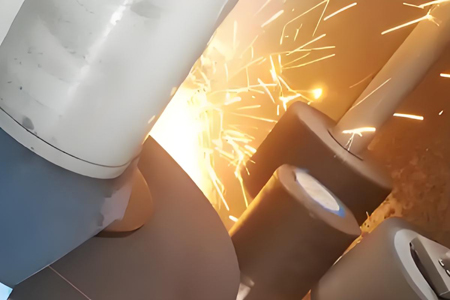
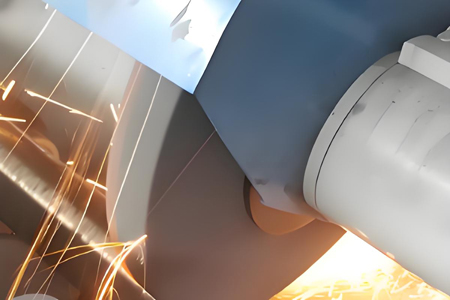
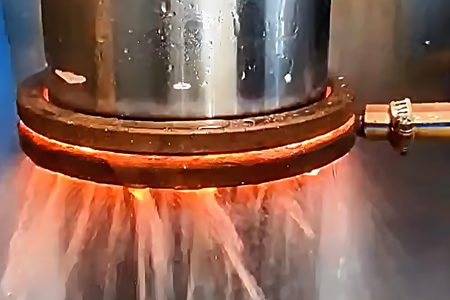
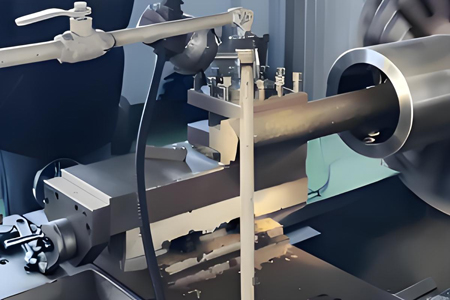
2. Advanced Production Equipment Our manufacturing facilities include cold drawing machines, honing machines, skiving and roller burnishing machines, straightening equipment,polishing machines, heat treatment furnaces, grinding machines, and more.
3. Rich production experience, strict quality control We implement a professional internal quality control system to conduct comprehensive inspections on all products.
Among the countless transmission mechanisms in the industrial world, hydraulic cylinders have become indispensable power actuators due to their powerful linear thrust and tension. Among various installation methods, the flange type hydraulic cylinder stands out with its unique structural design and excellent load-bearing performance, and is known as the "silent backbone" of industrial equipment under harsh conditions such as heavy loads and high frequencies.
The reason why flange type hydraulic cylinders stand out among many types of hydraulic cylinders is mainly due to their following core characteristics:
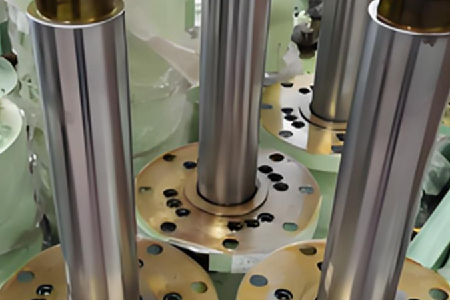
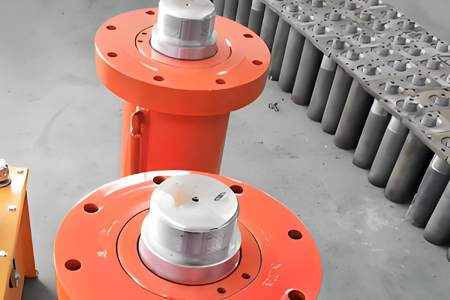
Extremely high structural rigidity and load-bearing capacity: The flange provides a large and stable installation base, which can effectively distribute the load and torque to the equipment base, effectively avoiding cylinder deformation or bolt fracture caused by stress concentration, especially suitable for bearing heavy loads and strong lateral forces.
Excellent fatigue resistance and long life: The sturdy flange connection greatly reduces the looseness and wear of the connection during continuous, high-frequency, or impact work of the equipment, thereby significantly improving the overall service life and reliability of the hydraulic cylinder.
Excellent Neutrality: The positioning stop or precision bolt holes on the flange ensure precise alignment between the hydraulic cylinder and the equipment, reducing eccentric wear of the piston rod and abnormal wear of the seal, ensuring smooth operation.
Stable installation and easy maintenance: fastened with bolts, the installation is firm and reliable. Both the front-end flange and the back-end flange provide relatively convenient access points for maintenance and replacement.
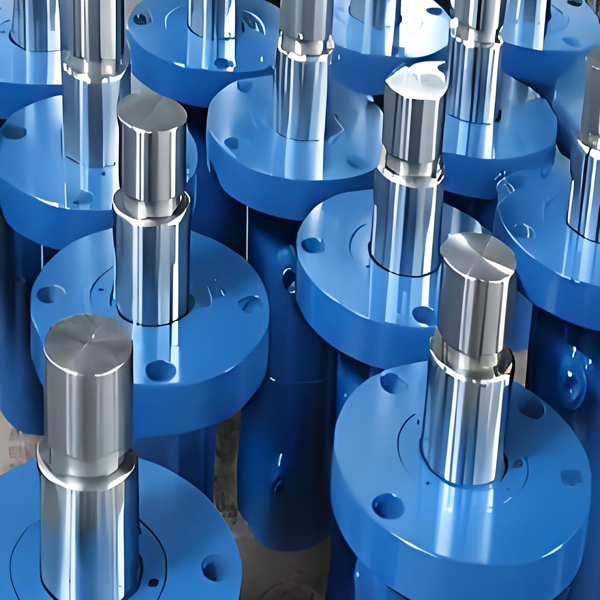
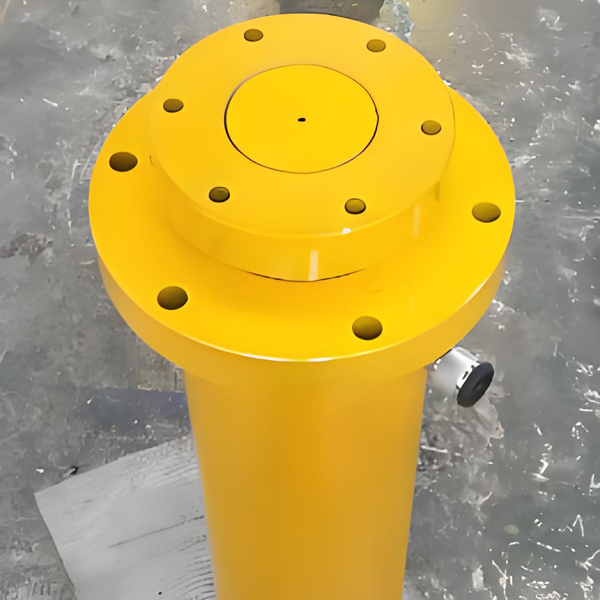
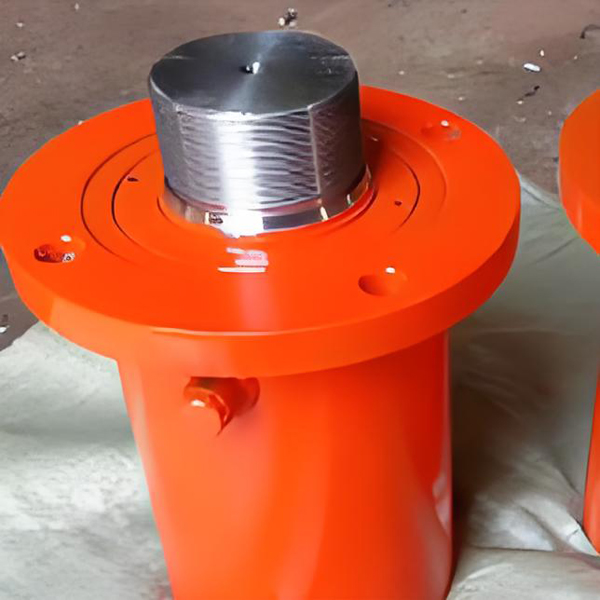
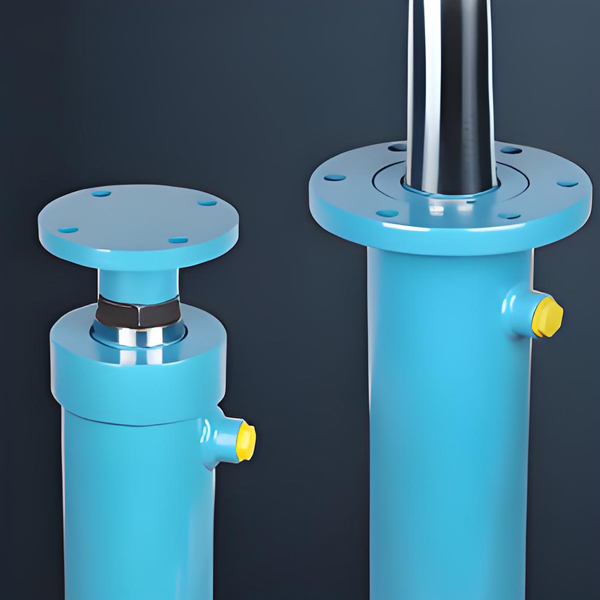
A flange type hydraulic cylinder is a hydraulic cylinder that is bolted to the main equipment through a circular or square flange plate (i.e. “flange”) at the end or bottom of its cylinder barrel.
Front end flange type: The flange is located at the front end of the cylinder (the protruding end of the piston rod), and after installation, the cylinder body is tightly attached to the equipment wall, with a compact structure.
Rear end flange type: The flange is located at the bottom of the cylinder, and the cylinder body hangs out after installation, suitable for situations where it needs to be fixed from the rear end.
The design of the flange type hydraulic cylinder enables it to easily cope with various complex and demanding working conditions:
Heavy load: In metallurgy, forging, and mining machinery, it can stably output thrust of hundreds or even thousands of tons.
High frequency reciprocating motion: In the opening and closing actions of injection molding machines and die-casting machines, it can withstand dozens of high-frequency cycles per minute.
Strong impact and vibration: In excavation and crushing operations of construction machinery, its sturdy connection can effectively resist impact loads.
Limited space constraint: The front-end flange design is very suitable for compact installation inside devices with limited space.
Its basic principle is consistent with all hydraulic cylinders, following Pascal’s law:
Power source: The hydraulic pump pressurizes the hydraulic oil and delivers it to the rodless or rodless chamber of the hydraulic cylinder through the control system (valve group).
Energy conversion: The pressurized oil acts on the effective area of the piston, generating a huge linear thrust or tension.
Thrust: Pressure oil enters the rodless chamber, pushing the piston rod outward.
Tension: Pressure oil enters the rod chamber, pulling the piston rod inward to retract.
Power output: The piston rod transmits this linear motion to external working mechanisms (such as molds, buckets, and lifting platforms) to complete the predetermined action.
Core role: In this process, the flange itself does not participate in the movement, but it serves as the “foundation” of the entire force transmission chain, ensuring the stability, efficiency, and reliability of the energy conversion process.
Injection molding machinery: used to drive the clamping mechanism and withstand huge clamping forces.
Metallurgical forging equipment: used in rolling mills, forging presses, and extruders to provide main pressure.
Construction machinery: such as the arm joints of excavators and the installation bases of breaking hammers.
Mining machinery: the core executive components of hydraulic supports, crushers, and other equipment.
Ship and Ocean Engineering: Used for servos, hatch opening and closing, anchor machines, etc.
Heavy material handling: forklifts, lifting platforms, garbage compactors, etc.
When the load is huge and there is lateral torque: this is its core advantage. If your application has a significant “leverage” effect, flange type is the best choice.
When the working frequency is high and the impact is large, its stable connection can effectively cope with fatigue and impact, reducing the failure rate.
When there are high requirements for the stability and accuracy of equipment operation, precise alignment and stable installation ensure long-term smooth operation.
When installation space allows: Compared to ear shaft or earring type, flange type usually requires larger radial installation space.
Compared to other installation methods:
Vs. tripod type: The flange type has much better anti torsion and anti lateral force capabilities than the tripod type.
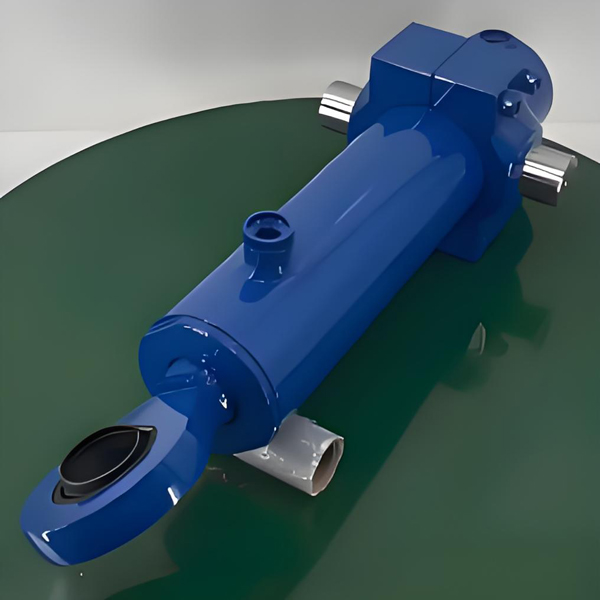
Vs. Earring type/Earshaft type: Earrings/Earshafts are more suitable for swing working conditions, but their rigidity and torque resistance under pure linear loads are not as good as flange type.
Intelligence and sensor integration: Built in displacement, pressure, and temperature sensors, real-time monitoring of cylinder status, achieving predictive maintenance and fault diagnosis.
Lightweight and high-strength materials: High strength alloys and composite materials are used to reduce self weight and improve energy efficiency while ensuring load-bearing capacity.
Higher energy efficiency and environmental friendliness: optimizing sealing technology to reduce internal and external leakage; Cooperate with low friction materials to reduce energy consumption. At the same time, it meets the demand for environmentally friendly hydraulic oil.
Modular and standardized design: facilitates quick selection, replacement, and maintenance, reducing inventory and lifecycle costs.
Extreme working condition adaptability: Develop special materials and specially designed flange hydraulic cylinders for special environments such as deep sea, polar regions, and ultra-high vacuum.