1. High-Quality Raw Materials Our raw materials are primarily sourced from renowned steel mills such as Jiangsu BOS Hydraulic Technology Co., Ltd., Baosteel, Ansteel, and Changjiang Steel Pipe.
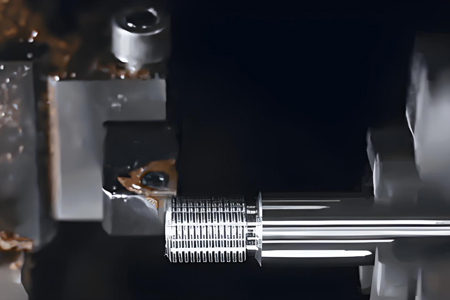
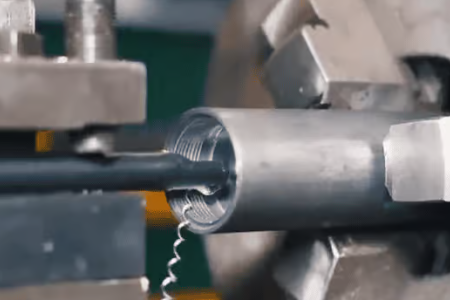
2. Advanced Production Equipment Our manufacturing facilities include cold drawing machines, honing machines, skiving and roller burnishing machines, straightening equipment,polishing machines, heat treatment furnaces, grinding machines, and more.
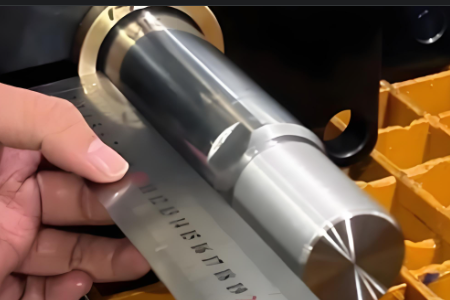
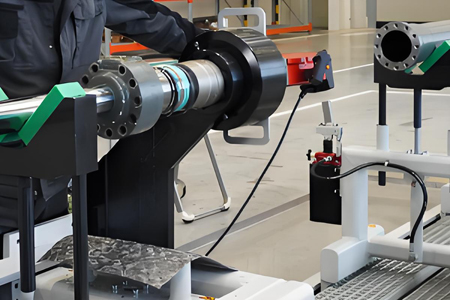
3. Rich production experience, strict quality control We implement a professional internal quality control system to conduct comprehensive inspections on all products.
The pull rod hydraulic cylinder has become an indispensable basic component in modern industry due to its unique design, excellent economy, and wide applicability. With the advancement of technology, it will continue to play an important role in a smarter and more efficient future industrial stage
Compact structure and light weight: Its structure determines that it does not require a thick cylinder barrel like a welded hydraulic cylinder to bear all the pressure. The pull rod bears the main load, so the cylinder barrel can be made thinner, the overall weight is lighter, and it is easy to install and layout in space.
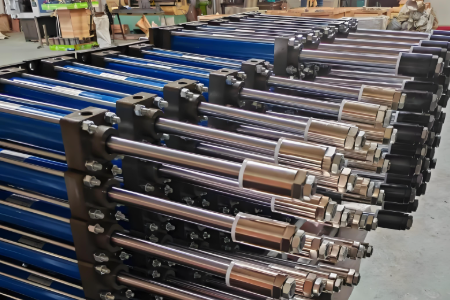
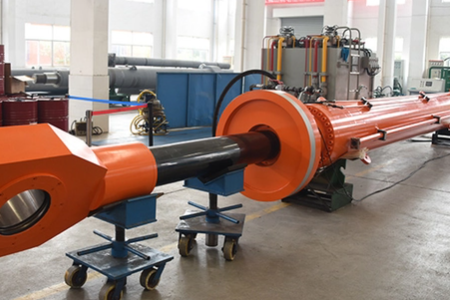
Good economy and high cost-effectiveness: Standardized and serialized design and manufacturing processes result in relatively low production costs, making it one of the most cost-effective choices for small and medium-sized, medium and low voltage applications.
Easy to maintain and repair: The most prominent advantage is maintainability. When the seal is worn or damaged, simply remove the pull rod nut to disassemble the entire cylinder, replace the seal and vulnerable parts without replacing the entire cylinder body, greatly reducing maintenance costs and downtime.
High degree of standardization: There are multiple standards worldwide, such as ISO, NFPA, JIC, etc., which ensure the interchangeability of installation dimensions and oil port positions, facilitating user selection and subsequent replacement.
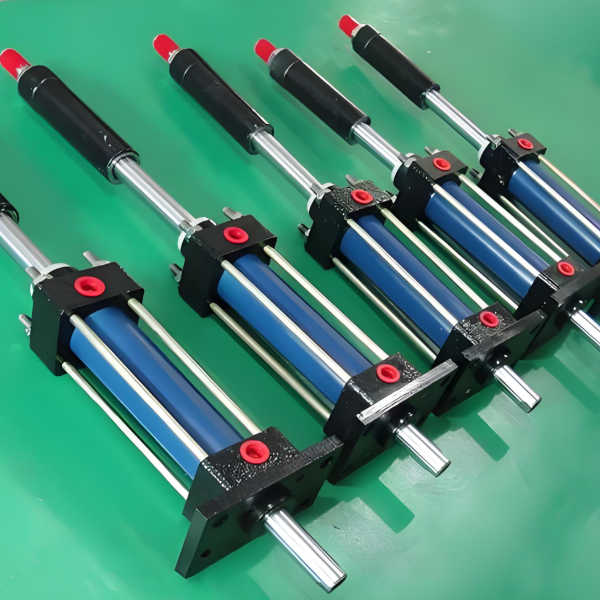
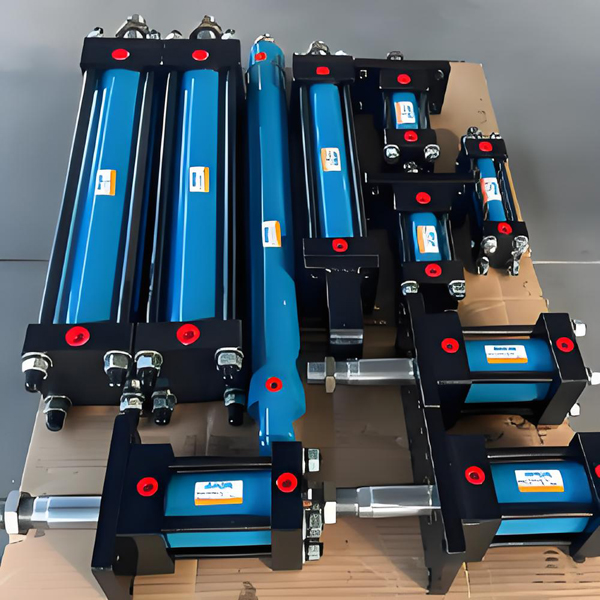
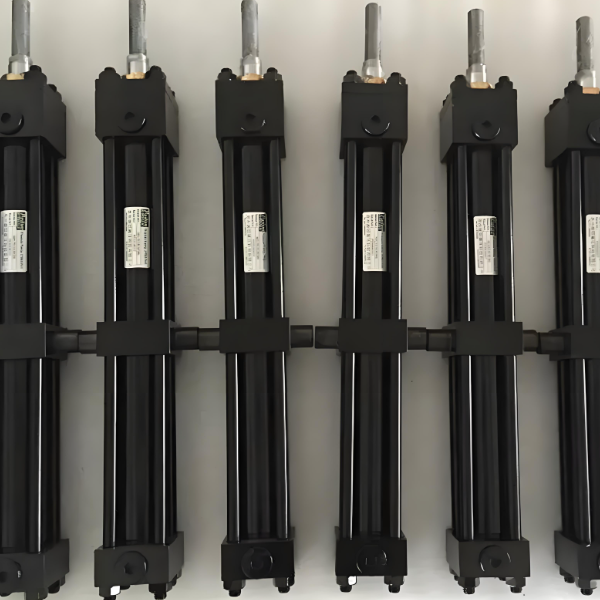
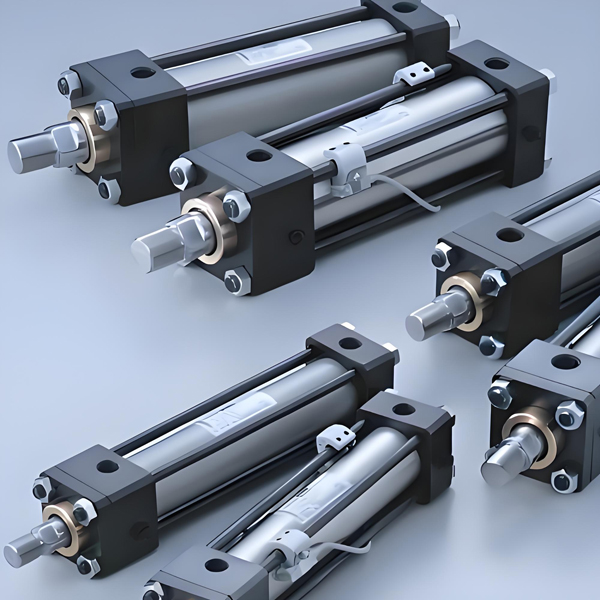
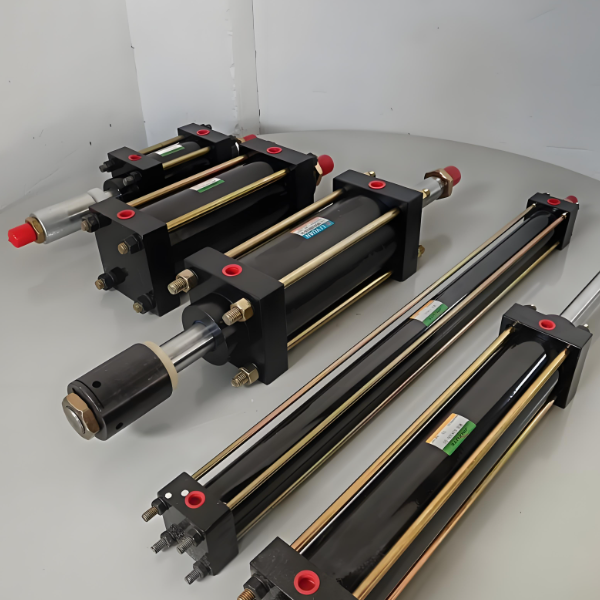
Rod hydraulic cylinder is a hydraulic actuator that uses four (or more) high-strength threaded rods to fasten the front end cover, rear end cover, and cylinder barrel together, forming a closed chamber.
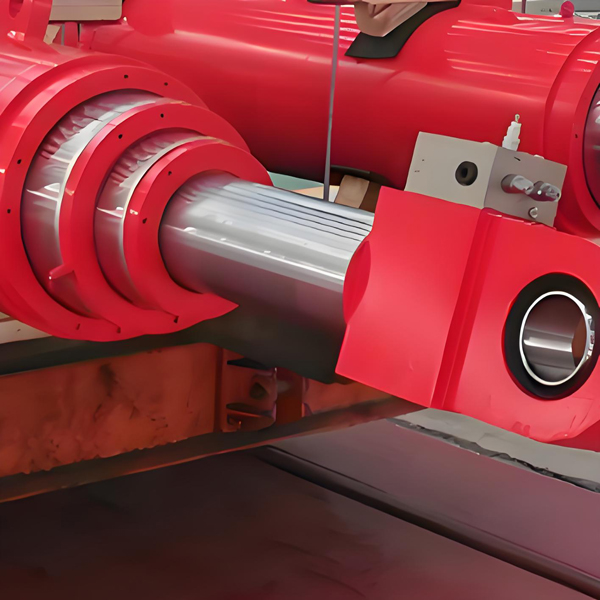
Core components: cylinder barrel, front and rear end caps, pull rod, piston and piston rod, sealing system
The design of the pull rod hydraulic cylinder endows it with excellent adaptability to various complex working conditions:
Wide pressure range: covering from medium and low pressure (such as 7-21 MPa) to high pressure (some models can reach 35 MPa), it can meet the needs of most industrial applications.
Multiple installation methods: Provides various installation options such as earring, flange, footrest, and pivot pin, which can be easily integrated into various mechanical equipment.
Media compatibility: Different sealing materials (such as nitrile rubber NBR, fluororubber FKM, polyurethane PU, etc.) can be selected to be compatible with different hydraulic media such as mineral oil, water ethylene glycol, phosphate ester, etc.
Environmental tolerance: It can be equipped with dust seals, high-temperature resistant seals, anti-corrosion coatings, etc. to adapt to dusty, high-temperature, or corrosive environments.
Pressure input: Hydraulic oil is pumped into the rodless chamber (behind the piston) of the cylinder from one end of the oil port.
Pressure establishment: Oil pressure acts on the piston end face, generating a huge thrust.
Linear motion: This thrust overcomes external loads, pushing the piston and its connected piston rod forward to perform external work (such as lifting or pushing).
Return movement: When hydraulic oil enters the rod chamber (front side of the piston) from another port and returns oil from the rodless chamber, the piston rod retracts.
Transmission of force: During this process, the enormous pressure generated inside the cylinder is jointly borne by the cylinder barrel, end cover, and key tie rod, ensuring structural integrity.
Injection molding machine: used for mold clamping and injection mechanisms, it is one of its most classic and widely used applications.
Metal processing machinery: such as clamping devices for machine tools, bending machines, and stamping machines.
Material handling equipment: lifting platform, forklift, baler, loading machine.
Automotive manufacturing: welding fixtures, lifting machines on the production line.
Agricultural machinery: tractor suspension system, harvester control mechanism.
Light industry machinery: food packaging, wood processing, textile machinery, etc.
Low total cost of ownership: Not only is the initial procurement cost low, but its easy to maintain feature also significantly reduces the maintenance and repair costs throughout the entire lifecycle.
Maintenance convenience: For production lines that do not want to experience prolonged downtime due to hydraulic cylinder failures, their ability to quickly disassemble and repair is a decisive advantage.
Space and weight limitations: In mobile devices or compact machines, their lightweight and compact structure are very advantageous.
Standardization and availability: Standardized dimensions mean that spare parts are easy to obtain, delivery times are short, and supply chain risks are reduced.
Sufficient performance: For the vast majority of industrial applications that do not require extreme high pressure, heavy load, or super strong impact resistance, the performance of pull rod hydraulic cylinders is already fully sufficient and reliable.
With the development of Industry 4.0 and intelligent manufacturing, the rod hydraulic cylinder is also constantly evolving, and the future trend is mainly reflected in:
Intelligence and status monitoring: Integrating built-in sensors (such as position, pressure, temperature sensors) to achieve real-time monitoring, predictive maintenance, and fault diagnosis of hydraulic cylinder status, seamlessly integrated into the industrial Internet of Things platform.
New materials and new processes: using lighter and stronger composite materials to manufacture pull rods and end caps; Apply more wear-resistant and high-temperature resistant sealing materials; Improve the corrosion and wear resistance of piston rods through surface treatment technology.
Higher energy efficiency: Optimizing internal flow channel design to reduce pressure loss, adopting low friction sealing technology to reduce start-up and operating resistance, thereby improving the energy efficiency of the entire hydraulic system.
Customization and modularization: Based on standard products, we provide more flexible modular design, allowing customers to quickly configure personalized products that meet specific travel, installation methods, and sensor integration requirements.
Environmental friendliness: The design focuses more on reducing the risk of leakage and using biodegradable hydraulic oil compatible sealing materials to meet the requirements of green manufacturing.