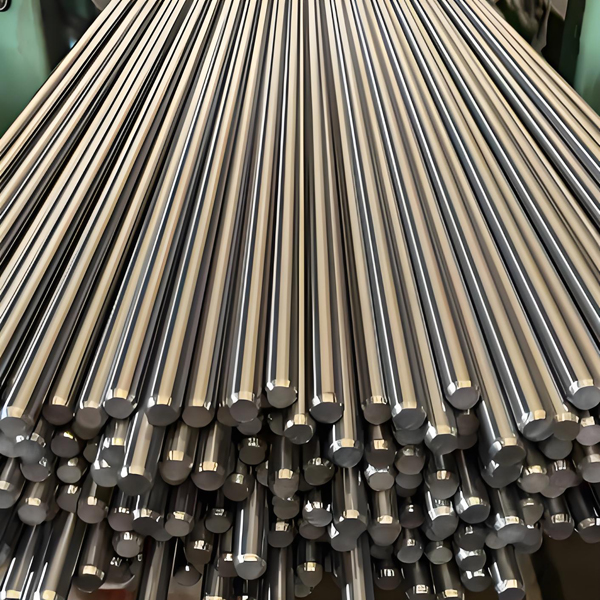
1. High-Quality Raw Materials Our raw materials are primarily sourced from renowned steel mills such as Jiangsu BOS Hydraulic Technology Co., Ltd., Baosteel, Ansteel, and Changjiang Steel Pipe.
2. Advanced Production Equipment Our manufacturing facilities include cold drawing machines, honing machines, skiving and roller burnishing machines, straightening equipment,polishing machines, heat treatment furnaces, grinding machines, and more.
3. Rich production experience, strict quality control We implement a professional internal quality control system to conduct comprehensive inspections on all products.
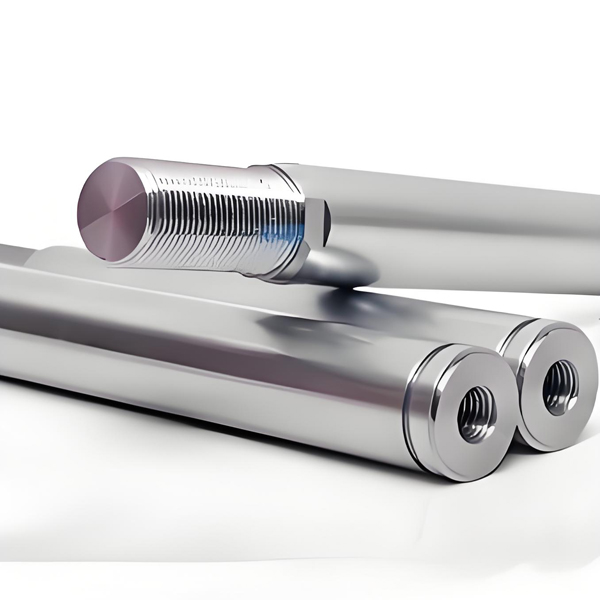
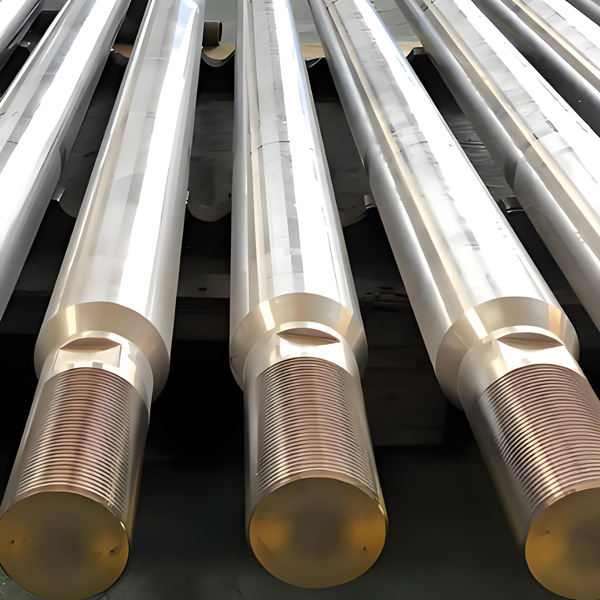
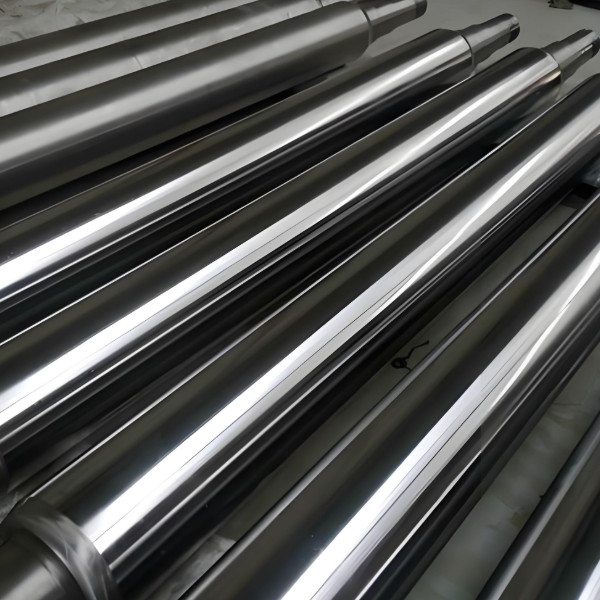
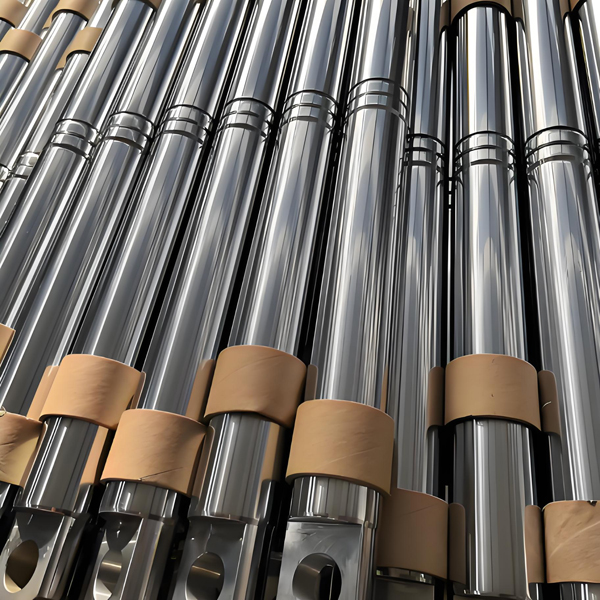

Carbon steel piston rods are usually made of high-quality carbon structural steel. After quenching treatment, the surface hardness can reach 45~52HRC, which has high strength and toughness, but weak corrosion resistance. Its processing performance is good, and it is suitable for improving wear resistance through high-frequency quenching, hard chromium plating and other processes
High strength and excellent toughness: Carbon steel can have both high strength (tensile and compressive) and good toughness through reasonable carbon content control and heat treatment processes. It can withstand huge alternating and impact loads without permanent deformation or fracture.
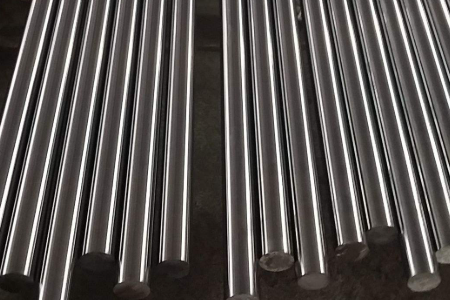
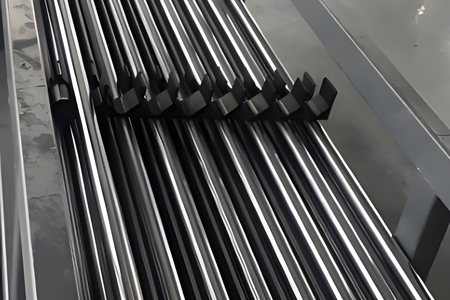
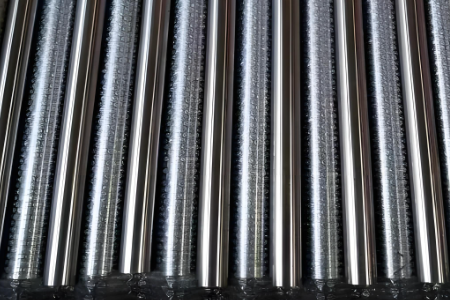
Excellent wear resistance: The piston rod needs to undergo high-frequency reciprocating motion in the seal, and wear is one of its main forms of failure. The surface of carbon steel piston rods is usually treated with high-frequency quenching, hard chrome plating, etc., forming a surface layer with extremely high hardness and smoothness, greatly improving the wear resistance life.
Excellent machinability and economy: Compared with special alloys such as stainless steel, carbon steel has better mechanical processing performance such as cutting and grinding, high processing efficiency, and lower cost. This makes large-scale, high-precision production possible.
Mature surface treatment technology: Hard chrome plating is the most classic and effective “golden partner” for carbon steel piston rods. This technology is mature and stable, with strong adhesion between the coating and the substrate, providing excellent corrosion resistance and wear resistance, and controllable cost.
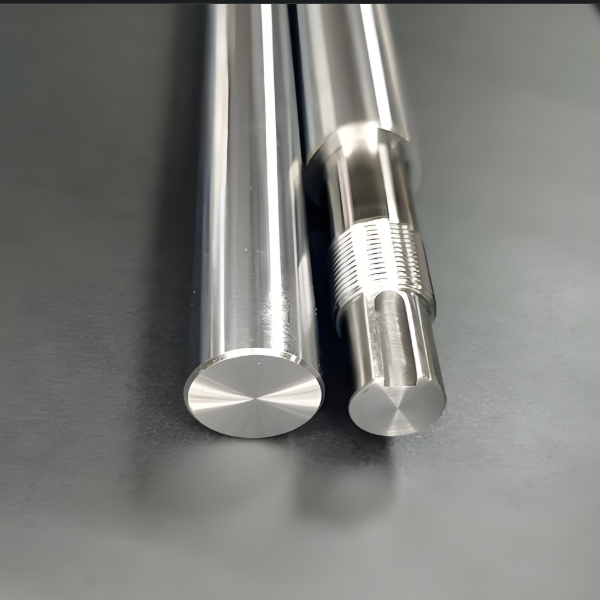
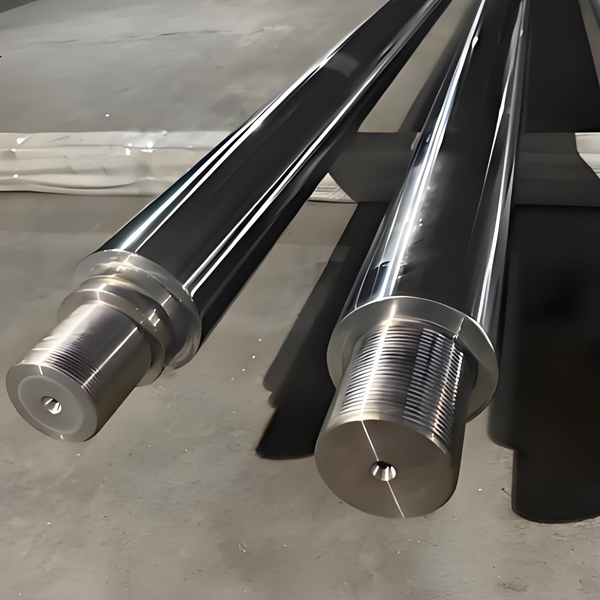
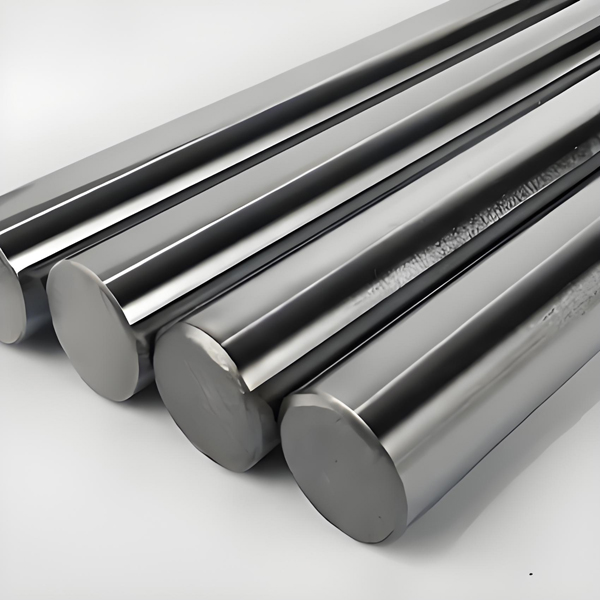
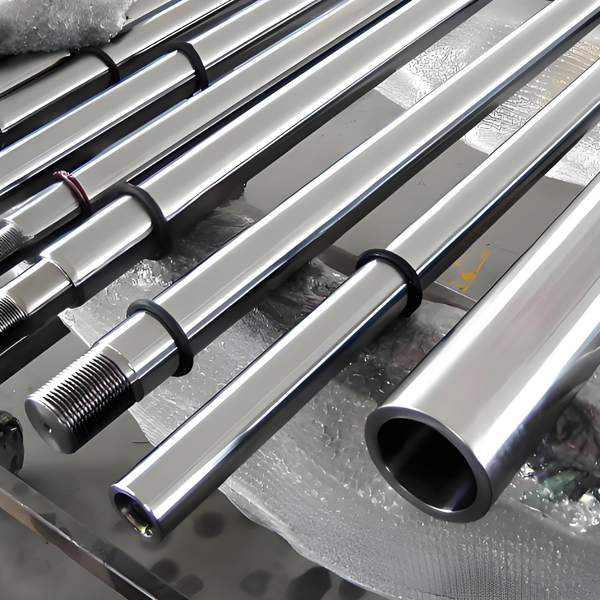
Carbon steel piston rod, in short, is a circular cross-section rod made mainly of carbon steel and used for reciprocating motion in oil cylinders or cylinders.
Material core: Its main material is carbon structural steel (such as 45 steel) or low-carbon alloy steel (such as 40Cr). The core of its performance lies in the “carbon” element, and the carbon content directly affects its strength, hardness, and weldability.
Structural role: It is usually a component of a hydraulic cylinder or air cylinder, with one end connected to the piston and the other end connected to the working mechanism. Its function is to convert the pressure energy of the liquid or gas in the cylinder into the linear motion of the piston rod itself, thereby doing external work.
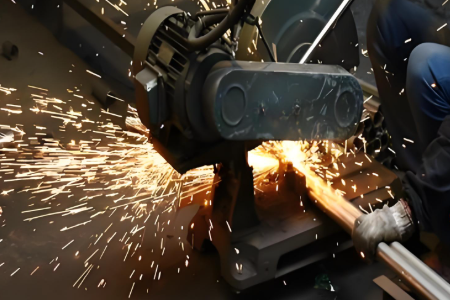
Typical manufacturing process: usually includes key steps such as bar cutting → rough machining → quenching and tempering heat treatment → precision machining (precision turning, grinding) → surface treatment (such as hard chrome plating, polishing), etc.
Coping with high loads: By selecting medium high carbon steel and undergoing “quenching and tempering treatment” (quenching+high-temperature tempering), a core with both strength and toughness can be obtained, which is sufficient to support the enormous force of heavy machinery.
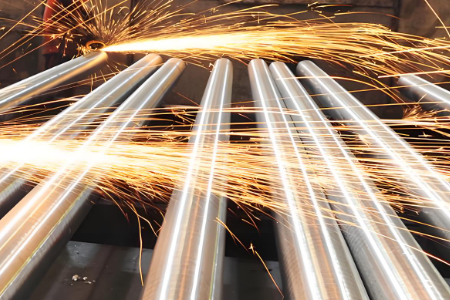
Coping with friction and wear: The surface is treated with “high-frequency quenching” or “hard chrome plating”, with a hardness of HV700 or above, like putting a layer of “armor” on the piston rod, effectively resisting the wear of seals and external dust.
Dealing with ordinary corrosion: The standard hard chrome plating layer can effectively isolate the substrate from contact with moisture and air, providing good rust prevention ability. For more harsh environments, thicker coatings or special coating processes can be used.
Dealing with harsh environments: In places with high dust such as mines and buildings, its wear resistance is crucial; Stable operation can also be achieved within a certain temperature range by selecting appropriate materials and heat treatment processes.
Power input: Pressure oil (or compressed air) enters a certain chamber of the oil cylinder (or cylinder), creating a pressure difference on both sides of the piston.
Force transmission: This pressure difference acts on the pressure bearing area of the piston, creating a huge thrust or tension.
Linear motion: This force is transmitted through the piston to the rigidly connected piston rod, forcing the piston rod to extend or retract from the cylinder and perform strict linear reciprocating motion.
Output of work: The end of the piston rod is connected to the excavator bucket, injection molding machine mold, lifting platform and other actuators, thereby converting linear motion into effective mechanical work to complete the predetermined action.
Construction machinery: hydraulic cylinders for excavators, loaders, cranes, and bulldozers – this is their largest and most representative application field.
Injection molding machinery: The clamping cylinder and injection cylinder of injection molding machines require high precision and stability.
Automotive industry: The piston rod in automotive shock absorbers requires high fatigue strength.
Agricultural machinery: lifting and steering cylinders for tractors and harvesters.
Metallurgical equipment: heavy-duty oil cylinders such as the pressing device and lifting platform of the rolling mill.
Mining machinery: hydraulic supports, rock drills, etc., with extremely harsh working conditions.
Aerospace: Landing gear, servo actuator, etc., with extreme material and process requirements.
Unparalleled cost-effectiveness: This is the core advantage. On the premise of meeting the strength requirements of the vast majority of industrial applications, its raw material and manufacturing costs are much lower than stainless steel.
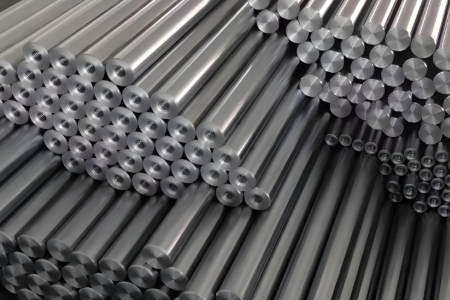
Mature supply chain and process: from material supply to processing, heat treatment, surface treatment, the entire industry chain is very mature, with stable quality and guaranteed delivery time.
The perfect balance between strength and toughness: Through mature heat treatment processes, it is easy to achieve a match between high strength and good toughness, which is crucial for working conditions that can withstand impact loads.
The convenience and efficiency of surface treatment: The combination of hard chrome plating technology and carbon steel substrate is the most classic and reliable, which can economically solve the problems of wear resistance and rust prevention.
With the development of industrial technology towards high efficiency, energy conservation, environmental protection, and intelligence, carbon steel piston rods are also constantly evolving:
Innovation in surface treatment technology:
Alternative chrome plating: Due to environmental pollution issues with traditional hard chrome plating processes, more environmentally friendly surface technologies such as laser cladding, high-speed oxygen fuel spraying, electroless nickel coatings, and PVD (Physical Vapor Deposition) coatings are being researched and applied to provide more wear-resistant, corrosion-resistant, and environmentally friendly surface solutions.
Optimization of the material itself:
Develop higher purity and more uniform microstructure microalloyed carbon steel to improve matrix performance without significantly increasing costs.
Composite materials, such as carbon fiber composite piston rods, have shown potential in lightweight and corrosion resistance, but currently have high costs.
Intelligent Manufacturing and Predictive Maintenance:
Utilizing IoT sensors to monitor the working status of piston rods in real-time (such as stress, temperature, surface damage), achieving predictive maintenance and avoiding unexpected shutdowns.
The manufacturing process is more intelligent and automated, ensuring the consistency and traceability of the quality of each piston rod.
Lightweight design:
By optimizing the structure (such as hollow design) and advancing material science while meeting strength requirements, the lightweight of the piston rod can be achieved, thereby reducing the inertia of the entire moving parts and improving equipment response speed and energy efficiency.