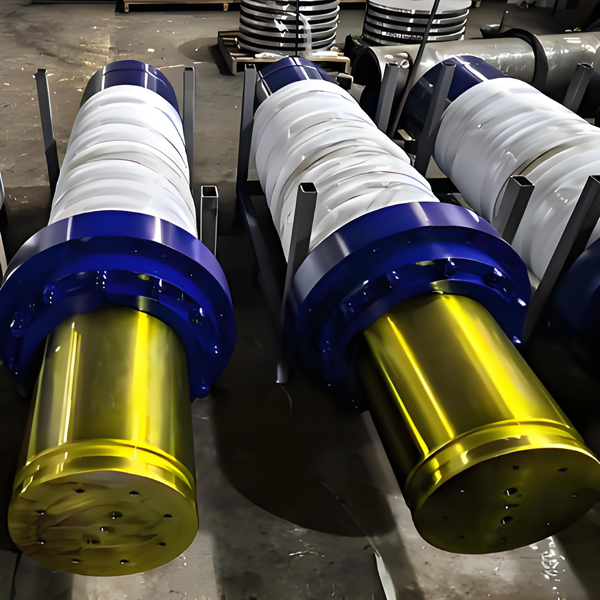
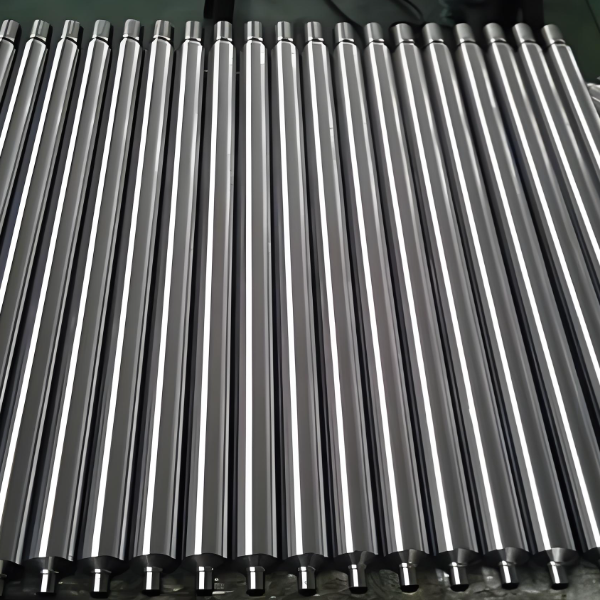
1. High-Quality Raw Materials Our raw materials are primarily sourced from renowned steel mills such as Jiangsu BOS Hydraulic Technology Co., Ltd., Baosteel, Ansteel, and Changjiang Steel Pipe.
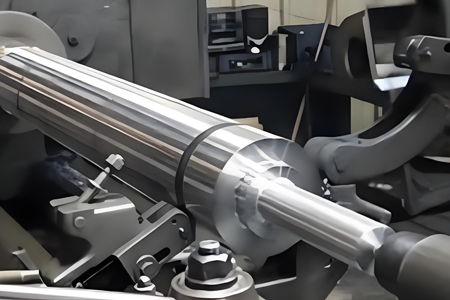
2. Advanced Production Equipment Our manufacturing facilities include cold drawing machines, honing machines, skiving and roller burnishing machines, straightening equipment,polishing machines, heat treatment furnaces, grinding machines, and more.
3. Rich production experience, strict quality control We implement a professional internal quality control system to conduct comprehensive inspections on all products.
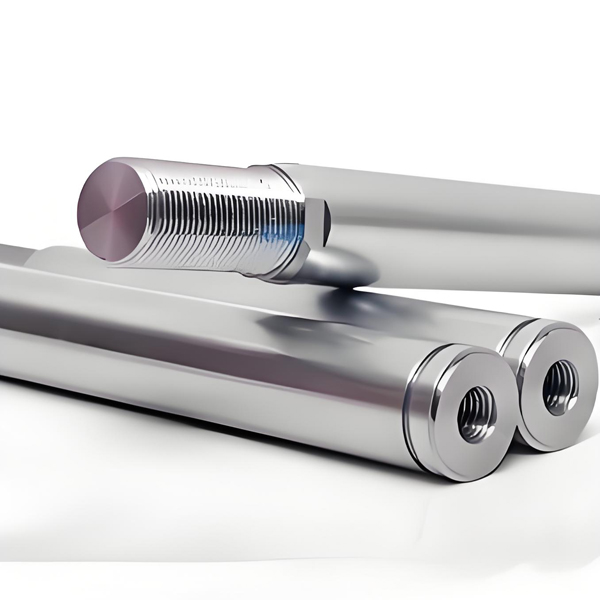
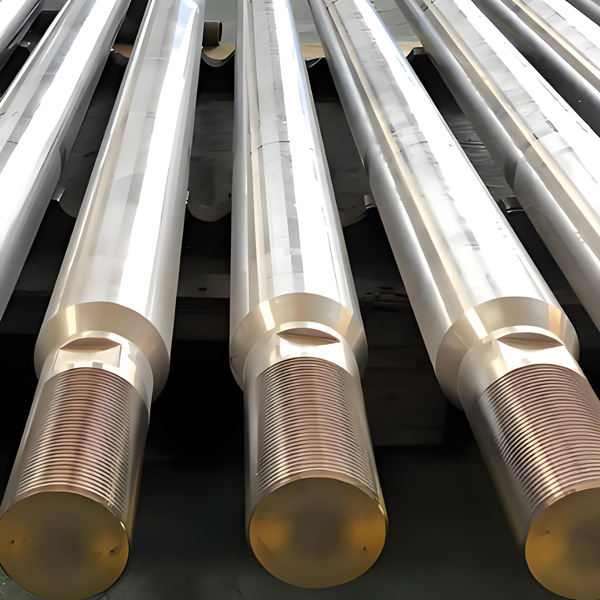
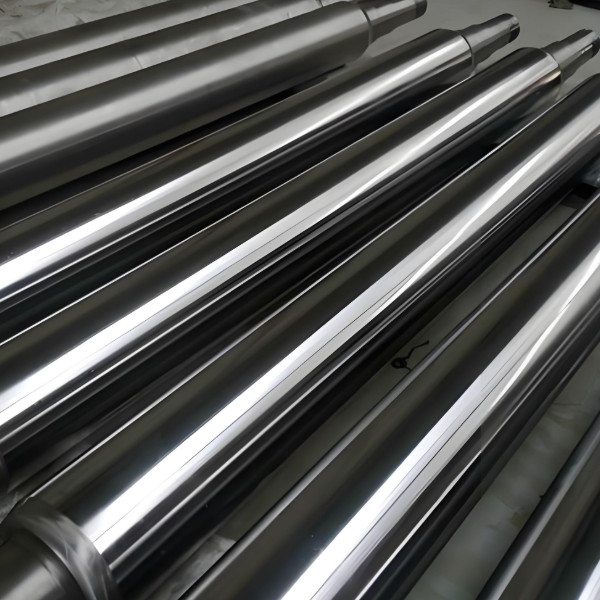
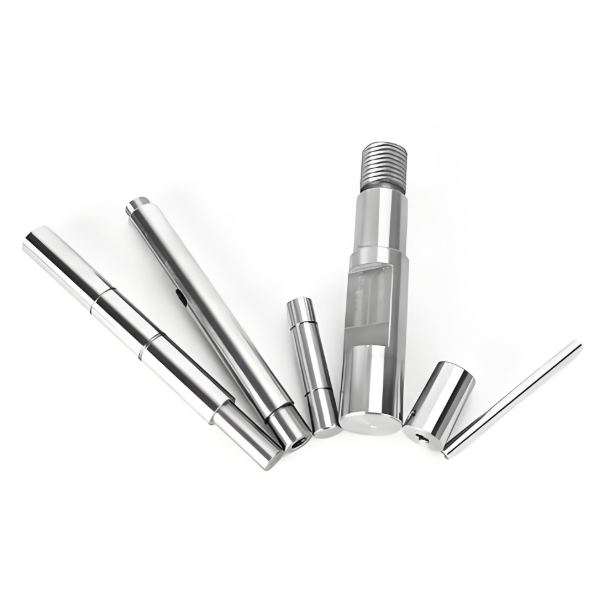

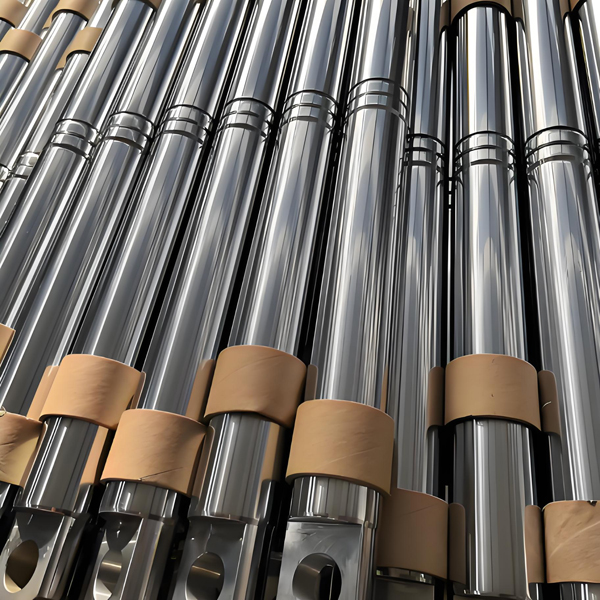
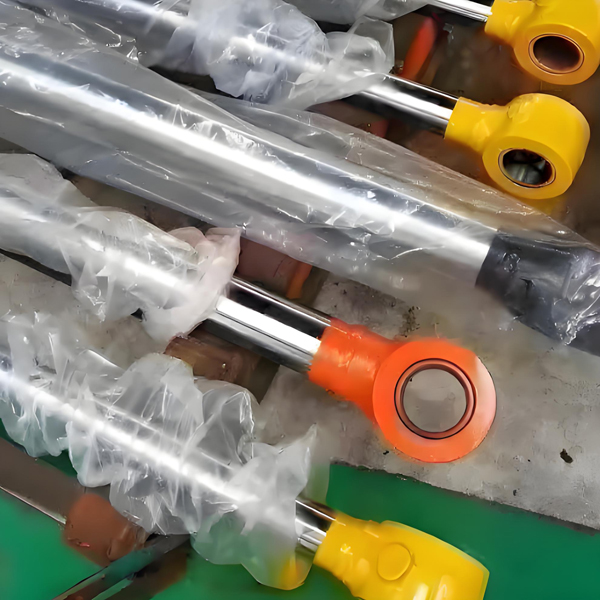
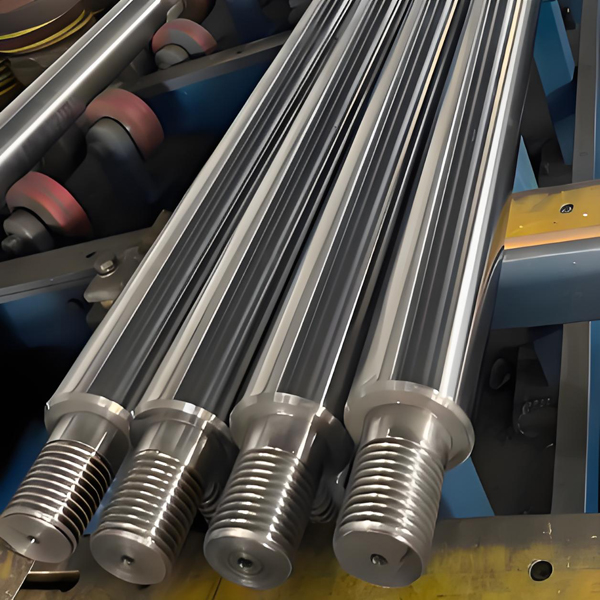
Cylinder pole: The core moving component of hydraulic systems. The cylinder pole is the core moving component of hydraulic actuators, with one end connected to the piston and the other end fixed to an external mechanism, transmitting power through reciprocating linear motion. Its core functions include power transmission, load bearing, and sealing coordination
The reason why hydraulic piston rods can stand out in various harsh industrial environments is due to a series of carefully designed and manufactured key characteristics:
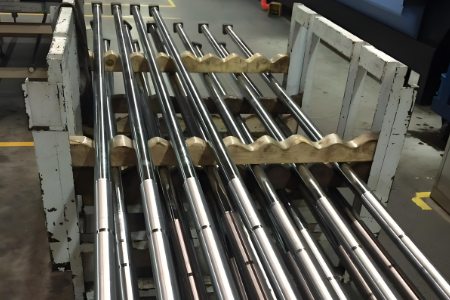
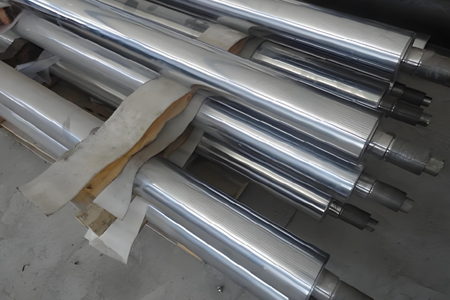
Extremely high strength and hardness: usually made of high-strength alloy steel (such as 40Cr, 42CrMo), and subjected to quenching and tempering treatment to withstand huge tensile and bending forces, preventing bending or fracture under heavy loads.
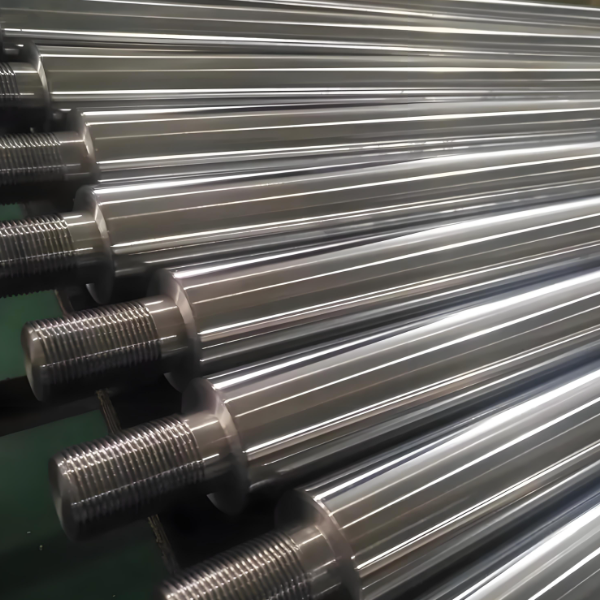
Excellent surface wear resistance: After precision grinding, the surface of the piston rod is mostly subjected to high-frequency quenching or hard chrome plating treatment. This forms an extremely hard, smooth, and low friction coefficient surface layer that can effectively resist the friction and wear of the seal and the scratching of external substances, greatly extending its service life.
Excellent fatigue resistance: In continuous reciprocating motion, the piston rod needs to withstand alternating loads. Excellent materials and heat treatment processes ensure that it has high fatigue strength and avoids cracking caused by stress concentration.
Reliable sealing: Its precision ground surface can form a tight and stable fit with the seals inside the hydraulic cylinder, effectively preventing the leakage of high-pressure oil and ensuring the efficiency and stability of the hydraulic system.
Strong corrosion resistance: For harsh environments such as marine and chemical fields, piston rods can be coated with special processes such as hard chromium plating, nickel based ceramic composite plating, stainless steel materials, or surface spraying to effectively resist rust and chemical corrosion.
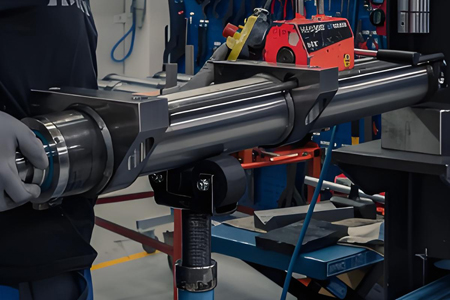
Hydraulic piston rod is a core transmission component in hydraulic cylinders. It is usually a rigid long rod with one end connected to the piston and the other end connected to the working mechanism through the cylinder head.
The success of hydraulic piston rods lies in their ability to flexibly adapt to various complex working conditions through different designs and surface treatment techniques:
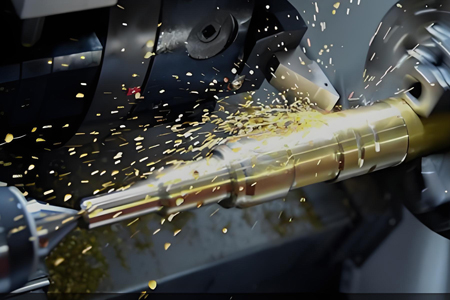
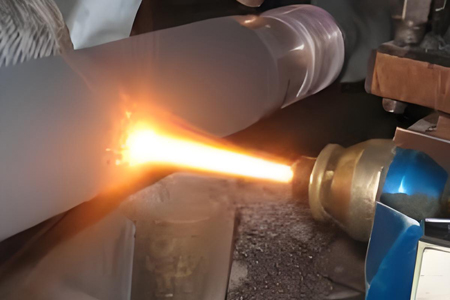
Heavy load and impact conditions: To cope with them, higher strength materials are used, the rod diameter is increased, and structural design is optimized (such as reinforcing ribs for hollow rods).
High wear resistance and high-speed motion conditions: using thicker hard chromium coating, advanced laser cladding technology or ceramic coating to reduce friction coefficient and minimize wear.
Corrosive environment: Add a sealing layer on the electroplating layer, or directly use stainless steel material, or even spray corrosion-resistant coating outside the plating layer.
Extreme temperature environment: Select materials that can maintain stable performance at high and low temperatures, and match them with corresponding seals and surface treatment processes.
High cleanliness requirements (such as food and pharmaceutical machinery): Made of stainless steel material and polished with a high degree of smoothness, easy to clean and corrosion-resistant.
The working principle of hydraulic piston rod is in line with the basic principle of hydraulic transmission, and it is a conversion process from hydraulic energy to mechanical energy
Pressure input: After the hydraulic pump pressurizes the oil, it is delivered to a certain chamber (rodless chamber or rodless chamber) of the hydraulic cylinder through a control valve.
Piston drive: High pressure oil acts on the end face of the piston, generating strong thrust (F=P × A, P is pressure, A is area).
Rod motion: This thrust pushes the piston and is directly transmitted to the piston rod rigidly connected to the piston.
Power output: The piston rod extends or retracts from the cylinder head under the action of thrust, performing linear motion. Its outer end is connected to the load, thus completing actions such as pushing, pulling, lifting, and pressing.
Return and circulation: The oil on the other side flows back to the oil tank through the return oil circuit under the push of the piston.
Construction machinery: hydraulic cylinders for the boom, bucket, and support legs of excavators, loaders, cranes, bulldozers, and rollers.
Metallurgical mines: the pressing device of rolling mills and the lifting cylinder of hydraulic supports in mines.
Aerospace: The retraction and control of aircraft landing gear, as well as the production of control surfaces and actuators.
Injection molding equipment: a huge locking cylinder for mold clamping and injection molding in injection molding machines.
Agricultural machinery: lifting and steering cylinders for tractors and harvesters.
Transportation: lifting cylinders for dump trucks and shock absorbers for cars.
Special equipment: Fire ladder, ship servo, and lifting device for stage machinery.
High power density: Under the same volume and weight, hydraulic transmission can output much more energy than electrical and mechanical transmission, making it very suitable for heavy-duty situations with limited space.
Smooth operation: The compressibility of the oil gives the system good buffering and vibration absorption capabilities, ensuring smooth movement, especially suitable for precise pressure control (such as injection molding pressure maintenance).
Convenient speed regulation: The movement speed of the piston rod can be infinitely adjusted through the flow valve, providing flexible control.
Flexible layout: Hydraulic cylinders, as executive components, can be independently arranged and connected to power sources through pipelines, without strict limitations on installation positions.
Overload protection: The system is easy to set up a safety valve. When the load is too large, the oil can be depressurized through the safety valve, thereby protecting the entire system from damage.
With the advancement of industrial technology, hydraulic piston rods are also developing towards higher performance, longer lifespan, and greater intelligence: material and process innovation, intelligence and condition monitoring, green and environmental protection, long lifespan and high reliability
In summary, although the hydraulic piston rod is a fundamental component, its technical content and reliability directly determine the performance of the entire hydraulic system. It is a combination of strength, durability, and precision, and is an indispensable key executor of modern mechanical equipment.